Showing posts with label brand marketing. Show all posts

Monday, October 28, 2013

Four Reasons Why Direct Mail is Still the Undefeated Hero

Some people are under the impression that direct mail is last year’s marketing plan.

Nothing could be further from the truth.

Direct mail is practically the class and quintessential modern marketing plan (and integrating social media and digital marketing only makes a marketing plan exponentially better).

In this post, we will examine exactly why direct mail is so powerful and still so relevant.

Direct mail has shelf-life

Not all advertising mail is discarded and thrown away. Coupons, special promotions, and “save the date” mailings are often placed on the refrigerator or coffee table to be used in the near future.

We can’t send tracking devices with each individual mailing to know and understand exactly what happens to it once it lands in a prospective client’s mailbox, but it is common for these people to arrive, mailing in hand, and ready to make a purchase.

Monitor direct mail response

Coupons are an excellent way of knowing if your direct mail campaign is working.

As you already probably aware, a unique call to action on the mailing can be directly linked to its mailing campaign. Source codes and priority codes are effective ways to see which lists are providing the best responses.

One of the most effective ways of measuring a direct mail campaign’s success is by looking at the bottom line – when business increases there is a way to know the direct mail campaign is working.

Deliver consumers to your website and Facebook page

Some skeptics today say that the internet will eventually phase out direct mail. In the past, we have already discussed why direct mail and social media are not just not enemies, but that they actually complement each other in highly successful ways.

Of course, people do go online to find the information they are looking for.
Websites and Facebook pages have largely become the “store front” for many businesses by giving access to consumers about everything from store hours to store inventory. However, there has to be a reason for someone to visit your website, and direct mail can be the catalyst that sends them there.

Effective advertising

On the first day of marketing school you learned this tip: Anything you can do to keep your name in front of your customers is important to retention of those customers.

Whether a business is just starting off building brand name awareness or they are reminding existing clients that they are ready to serve them, direct mail campaigns makes it happen

Compared to radio, television or newsprint, direct mail is still the best value in advertising.

When are you going to start your next direct mail campaign?

From social to print, we are going to take you places. Contact us to get started today.

Monday, September 23, 2013

Accomplishing Effective and Successful Email Marketing Plans

If you’ve seen our Facebook page lately, you know we’ve been sharing articles on the popularity and importance of email marketing – and how to do it right.

This blog post will serve to help those of you who are excited about this marketing strategy but from a unique angle: let’s take a look at some of the mistakes we can make as email marketers so we know to avoid them in the future.

Without any further ado, what are some mistakes you can make in your email marketing plans?
Just do the following:

Be too focused on incremental tactics 

Sure you can tweak the subject lines all you want, but it won't improve your overall program. Focus most of your time on the big support efforts that will drive major revenue growth. It sounds obvious once we verbalize it, but remember: Taking care of the big things should always be done before the small thing.

Forget to integrate


Good, because the same is true with email marketing. Email drives subscribers to visit your website, visit your stores, phone your call center, and engage with your social media pages. It also pulls in web and mobile behavior, consumer reviews, catalog assets, and so much more.

Don’t test your tactics

What should you really be doing? Rather than organizing testing as an alternating tactic, use it as a strategic process. Take a progressive approach by testing types of variables that you can leverage and build on for successive testing. But if you want your plan to fail, of course you won’t do this.

Miss the easy stuff 

This is a big one. There are a lot of great avenues to go down, but if you’re looking to have an ineffective campaign, then definitely forget where they are.

See, a "Happy Birthday" email is would have been great and yet too many B2C marketers don't send these messages. "We don't have subscribers' birth dates" is a common excuse. Our solution? Start capturing them. Get a program that helps you capture them so you can start generating revenue.

Avoid the big picture 

Jump straight into redoing your email templates with a responsive design even though your website is not mobile friendly, especially if most of your conversions are happening on desktops, and you ignore the fact that mobile is really about context and content.


From social to print, we are going to take you places. Contact us to get started today.


Monday, August 26, 2013

Important Answers to Critical Postcard Design Questions

We know just as well as you that direct mail is not dead. Well, the Huffington Post agrees with us in a new article published just last month.

With all of that said, let’s discuss postcard design that actually gets results.

Postcard design should not be just taking a larger print, cutting out some copy, and shrinking it down. We aren’t saying that is ineffective, but we are saying you can do a lot better.

Often, postcards can be produced quicker and lower production costs, so they’re easier to get in the mail faster. Messages should be simple, easy to digest, and easy to remember. They allow you to reach your best prospects in their homes, and you can personalize your offer for relatively little additional expense.   
  
In this post, we are going to look at postcard design and ask some fundamental questions. These questions are common and simple, but their answers are often ignored.

Should you use a theme on your postcards?

There is no objective answer to this. Sometimes themes work; other times they fail horribly. Remember, if you must use a theme, at least focus the theme on a product and offer. A “theme” doesn’t benefit consumers, but a product and offer does.

Does your postcard design have an easily identifiable product?

Prospects won’t hunt for the product, so it needs to be in their face without any guesswork involved. Make sure your prospects don’t have to read a hundred words to know what is being offered. If you have no special rate, no incentive, no giveaway, then you have nothing.

Does your postcard feature a definitive call to action?

Adding your basic contact info (phone, web address, etc.) is good, but it’s not a call to action. You need to tell readers precisely what to do next and repeat the offer, like this: “To learn more about our special 10% discount on Product X for all new clients, call us at XXX or visit our website at XXX.” 

Additionally, make sure your postcards includes a method or mechanism to track its ROI. If the CEO asked the marketing department how many loans a postcard has generated, make sure you are able to track that and have an answer.


Do you have a postcard question and answer you think is important? Please share it with us in a comment.

From social to print, we are going to take you places. Contact us to get started today.


Monday, June 24, 2013

How and Why Social Media Matters to Your Business

Just about every business leader has heard about it, but that doesn’t mean every business leader understands it.

Social media is no longer optional. It’s a priority in every business’ marketing portfolio and it’s been this way now for years. The reason social media drives success is because it has revolutionized the way brands and businesses communicate with their customers.

While print marketing is still a valuable form of advertising, social media goes beyond one-way communication messaging. Social media is about engagement. It’s live and it provides businesses with the tool for two-way communication with their customers.

Sadly, only 1 out of 3 small businesses use social media according to research done in 2012 by Gartner, an IT research and advisory company. Furthermore, they also report that 50% of web sales will occur via social media by 2015.

Doesn’t it make sense for every business to be a part of that?

What business owners should know is that social media is now a major part of most people’s lives. That same research shows that 79% of Facebook fans are more likely to purchase from a brand they have connected with on Facebook. Facebook says they have more than one billion users on the site each month as of March 2013.

The statistics are practically yelling about how important this business opportunity is.
This gives brands the opportunity to humanize themselves and start engaging with consumers. In the process, businesses receive the following benefits:

  • Increase sales
  • Increase prospects and leads
  • Build brand awareness
  • Improve knowledge of prospects and clients
  • Improve marketing ROI
  • Become the thought leader in your industry
  • Launch new products or services

Here is a checklist for business owners to understand what resources they need in order to effectively manage social media:
  •    Know your audience and who you are targeting: age, location, income, etc.
  •    Speak AND listen. Social media is not a billboard; it’s a conversational venue.
  •    Diversify your content. Post pictures, ask questions, experiment, and be fun.
  •    Be professional and personable. Depending on your brand and messaging strategy, you’ll fall somewhere in the middle of the professional-personal spectrum. Make sure messaging is never too stiff or too personal sounding.
  •    Know how to manage ROI or employ someone who does. Study metrics and insights and adjust content to what works.
  •    Know when to get help. If you are unable to do social properly and effectively, hire someone who can. There is no value in social media if it is not done right.
It’s past the time that every business owner understands social media so they can use it to their advantage. Almost 8 new people come onto the Internet every second. Will they find you?

Contact Tray, Inc. for your Social Media Management Solutions today.

From social to print, we are going to take you places. Contact us to get started today.


The Tray Way is the blog for Tray, experts in the printing, mailing, logistics and promotional products. You can learn more about our capabilities by visiting our website, as well as our Facebook and Twitter pages. For information about the company and its successes, visit www.trayinc.com


Monday, May 27, 2013

Print Media Still Dominates the Marketing Scene

With the quick and steady increase in social media’s popularity, many people have begun to question the importance, value, and relevance of print media.

Does print media no longer matter? Is it no longer relevant?

Is social media replacing the once-considered timelessness of print media?

These are important questions to ask. The quick and dirty is that print media definitely still matters, the details of which we will explain momentarily, which will shine brightly upon the multiple dimensions of print media’s relevance, value, and importance.

Furthermore, if you are questioning whether social media is replacing print media, the answer is an astounding no. You may remember from our post in Marcy, Social Versus Print: Why These Two are Friends – Not Enemies, that “As time moves forward, so does the progress in social and print marketing efforts and emerging avenues for integrating the two.”

But aside from the merging of social and print, where does print media’s relevance stand today?

That’s a great question and if we some great answers. Here they are:

     · Print is Portable – Even with laptops and smartphones, print media still retains the ultimate portability. It’s available to everyone, everywhere, regardless of service or power.

     · Print is Preferred – Many consumers still prefer traditional print material, such as magazines and newspapers, over electronic versions.

     · Print is Visible – While it’s true that sending and sharing electronic media is easier and faster, printed publications are often more visible to the average consumer. No specific keyword, special account, or access is required.

     · Print is Long-lasting– Unlike a window that may be closed, an ad that may be missed, or an e-mail that gets deleted, print media doesn’t go anywhere and can last practically forever.

     · Print is Professional – There is a credibility that is achieved in print that is harder to replicate online. A published article or business magazine carries far more weight than a PDF version found online.

     · Print is Advertising – While there are many different advertising channels, print media is still widely used in advertising. Brochures, flyers, pamphlets, catalogs, and posters are just a few examples. Most importantly, they exist in places where electronic media cannot.

Remember: Print media’s relevance and persistence is ubiquitous in the marketplace – the exact position you want to hold as well. If you want results, print them out and take them.

From social to print, we are going to take you places. Contact us to get started today.



The Tray Way is the blog for Tray, experts in the printing, mailing, logistics and promotional products. You can learn more about our capabilities by visiting our website, as well as our Facebook and Twitter pages. For information about the company and its successes, visit www.trayinc.com


Monday, October 29, 2012

The Print Marketing Renaissance


One topic we bring up from time to time, here, is the idea that print marketing is all about standing out from the pack. I know, it sounds ridiculous. But things have changed. The days of opening a mailbox to a flood of junk mail are over. Print marketing today is about risk. It’s about creativity, and it’s about trying something different. We’re not here to talk about junk mail, or sending out millions of generic postcards. It’s time to treat print as a non-traditional marketing source.

Business2Community has recently published an article showing 7 major events in marketing, and why they all point toward a return to the print medium. It’s a great article (which you may have seen on our Facebook page), but we’re going to go one step further. We’re going to give you a few ideas that may inspire you to take B2C’s list to heart.

Broad-Interest Publications are Leaving Print

Newsweek announced earlier this month that they would be ceasing all print publications. Dozens more general interest magazines are leaving print behind, and that means that a huge opportunity for marketers is opening up.

Does your business cater to a niche audience? Send out a brief magazine appealing to their interest. It doesn’t need to be a weekly, or even a quarterly, thing, but what could make you stand out from the crowd of catalogs better than this?

Changes in Consumer Usage Open the Door for Digital Integration

Digital integration is no longer an option for marketing – it’s a requirement. Today’s consumer demands more from marketing materials. More information, more detail, more interesting content, and more bells and whistles. For your next campaign, try including a print component that plays off of your digital efforts. Push consumers to your social media pages, or direct them to your other digital resources. Just don’t rely on QR codes to do the job for you. Innovate!

The Social Web is Crowded, Make Things Personal

Print has always been the most personal form of marketing communication. What do you think makes a better impression with a new client: A direct message on Twitter, or a hand-written ‘Thank You’ note?

Our print solutions can make all of these things possible, and print has not seen consumer interest like this in several years. Take advantage of the possibilities, and give us a call.


The Tray Way is the blog for Tray, experts in the printing, mailing, logistics and promotional products. You can learn more about our capabilities by visiting our website, as well as our Facebook and Twitter pages. For information about the company and its successes, visit www.trayinc.com


Friday, September 14, 2012

Learning From Mistakes


In today’s digital world, all eyes are on you, all the time. The critical eye of the consumer never closes, and the world of social media has created a place where even the smallest branding faux pas is a recipe for complete financial disaster. There are cases of poor taste, such as this May advertisement for Belvedere Vodka. Even worse, there are times when brands can be persecuted for things they have absolutely no control of, or involvement in.

What can you do when your brand is thrust into the spotlight of consumer criticism? Can either of those examples serve as a template for escaping a PR nightmare?

The Skittles Strategy

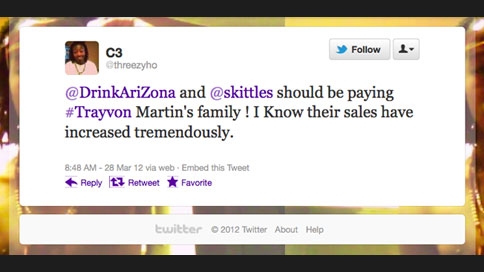
When details about the tragic Trayvon Martin shooting went public, Skittles and Arizona Iced Tea became unintentional icons of lost innocence. The brands were spoken of almost as often as the investigation itself. Consumers, invested in the horrific details of the killing, began to accuse both brands of profiting off of the tragedy and media exposure. Neither brand had anything to do with Martin’s death, but both were being ripped to shreds on social media for failing to respond.


What did they do?

Skittles and Arizona Iced Tea were forced to act, and responded with letters of condolence to Martin’s family. They said it would be the last word on the matter, and both brands stuck to their guns, refusing to give in to the public outcry.

What went wrong?

Consumers were convinced that both brands were pulling in record profits from the media hype, and demanded financial recompense. It was a bizarre and unfounded complaint, born from a collective desire for closure that court proceedings was not providing. Arizona and Skittles did their best to avoid further scrutiny by keeping silent, and they ended up being seen as uncaring and cold.

The Belvedere Vodka Strategy

In early March, Belvedere began a commendable social media effort, relying on a strategy of casual humor, and easily shared jokes, each one a clever ad for their product. Unfortunately, the casual attitude went too far, and an ad that never should have made it past editing wound up on their public-facing Facebook page.


What did they do?

The ad was a clear misstep, and the backlash was fast and fierce. Belvedere pulled the ad once the blogosphere had gotten wind of it, and issued a series of apologies. They attempted to save face with a donation to an anti-sexual violence non-profit, but the move was seen as a shady PR stunt, and the brand has still not fully recovered.

What went wrong?

By the time Belvedere had responded to the complaints, any response they made would have been too little, too late. Unfortunately, once that ad was made public, there was nothing they could really do to make up for the damage it caused. Even though Belvedere went one step further than Skittles and Arizona, they were still seen as a corporation saving face, instead of an apologetic brand. They owned their mistake, but it wasn’t enough.

So, what can you do differently?

Any brand of reasonable age and size is in danger of falling into an inescapable faux pas like those above. It’s an unfortunate – but unavoidable – aspect of business. The solution lies in relying on the expertise of a branding agency, and using all of the available tools you have to protect your investment. If the worst happens, you need to be able to rely on a team that is flexible enough, fast enough, and smart enough, to turn the situation around.


The Tray PML Way is the blog for Tray, experts in the printing, mailing, logistics and promotional products. You can learn more about our capabilities by visiting our website, as well as our Facebook and Twitter pages. For information about the company and its successes, visit www.traypml.com


Monday, August 20, 2012

The Tray Way: How Do You Trust Something You Don't Know?

What makes us trust a brand? Obviously, the top answer is when a brand does right by you or someone you know. But, that only accounts for a limited number of situations. What about when that first-hand information isn't available to a person. Unfortunately for brands, the criteria can be less concrete.

This is the thought we had after reading a fun study, conducted by beverage company Honest Tea. They researched and reported on honesty of an array of different topics. The results include:
  • 93% of participants were honest
  • Salt Lake City and Oakland were both 100% honest
  • Women are 95% honest while men are 91% honest
  • Boston baseball fans are more honest than New York baseball fans
  • Redheads are more honest than blondes and brunettes
  • Motorcyclists were 92% honest while Comic Book fans were 86% honest
  • Men with beards were 96% honest while bald men were 85% honest 
Our first response to this release was that this is was a very clever way to promote their brand (well done, Honest Tea). But, our second thought was that these are some random results and that it is hard to believe that all the people surveyed have decisive (and objective) opinions on all of these topics. What this means is that at least some were just making up the answers based on the mood they were in (perhaps) or some other reason that isn't first-hand knowledge.

This is not good news for brands, especially ones that do everything right but feel like they are getting nowhere. The truth is (no pun intended) that sometimes you can't gauge what customer response to your brand will be, especially if they have nothing to base their decision on. It isn't that you aren't an honest brand that can't be trusted, its that a person, for example, may happen to see a website or a billboard for your competitor at the moment they need to make a decision. The best you can do is treat all current and potential customers the way they deserve to be treated, and continue to convey a message, tone and philosophy that is based around honesty and integrity. From there, marketing yourself in the most positive and strategic way possible to better convey your honesty has been proven to be the most effective means of gaining more business. Is there a 100% success rate? Of course not, but a customer's decision to choose a competitor can be for any number of reasons, whether it be a substantial or flimsy one (and that's just us being honest).


The Tray PML Way is the blog for Tray, experts in the printing, mailing, logistics and promotional products. You can learn more about our capabilities by visiting our website, as well as our Facebook and Twitter pages. For information about the company and its successes, visit www.trayinc.com

Thursday, May 31, 2012

The Tray Way: Cross-Channel Marketing - The Online Catalog

To complete our May blog series on cross-channel marketing, we wanted to close the month with a product we have been heralded for as of late: The Online Catalog

Whether it is for B2B or B2C purposes, the online catalog offers a number of benefits 
  • Create a more automated system 
  • Reduce inventory 
  • Improve turnaround times
  • Make your brand seem more "tech-savvy"
  • And, when combined with a website, social media channels or even print marketing, develop a cross-channel marketing workflow that allows for greater reach.
At Tray, the creation, development and implementation of online catalogs has been a perfect supplement and evolution to the work we have been known for. Our work with DoubleTree by Hilton helped revolutionize their internal communications abilities. According to their press release:
Prior to 2011, when a DoubleTree property wanted to order customized printed collateral or branded on-property materials for their hotel, they were faced with many different procedures. They envisioned a comprehensive toolkit where all promotional materials could be ordered from one place including on-demand digital, offset, large format and specialty items
We are extremely proud of our work on that project, but that work is quite elaborate and involved a number of moving-parts and approvals. While it was literally award-winning, we understand that not all businesses have the time, energy, budget and desire to be praised nationally. They want something that is functional, appealing to the eye, easy to use and affordable. For this reason, one of our favorite case studies is our work with Gator Athletics. We worked on creating an online catalog that they could promote and share through all their channels. It aligns with all their branding and criteria, despite not having the revenues of a multinational hotel chain.

Are you considering creating or improving an online catalog for your business? What are the most important features you are looking?


The Tray PML Way is the blog for Tray, experts in the printing, mailing, logistics and promotional products. You can learn more about our capabilities by visiting our website, as well as our Facebook and Twitter pages. For information about the company and its successes, visit www.traypml.com

Friday, March 30, 2012

The Tray Way: Marketing Tips You Can Learn from the Final Four

After a grinding college basketball season and a tough NCAA Tournament, we are down to the Final Four basketball teams in the country: Kentucky, Louisville, Kansas and Ohio State. Four qualified teams that have had to work hard to be in the position they are in.

So the question becomes, “who will win this weekend?” Sure, your brackets were filled out weeks ago and the decision on which teams to pick were based on everything from field goal percentage to locations of the schools.
We decided to make our Final Four game predictions based on what we know best: Branding, specifically taking the most visual representation the four teams have – their jerseys - and analyzing their colors and font styles to determine which represents the key ingredients needed to be winners.

In general, "reds" (and other “warm” colors) are more aggressive, exciting, energetic, and dominant. In contrast, “blues” (and other cool colors) are masculine, calm and tranquil.

As for fonts, those that are “blocky” and san serif imply power and strength, while serifed fonts offer a more traditional and classic feel.

While all of these descriptions can be beneficial at one point or another on the basketball court, based on our research and marketing experience, if it were on branding alone, Louisville and Ohio State would be meeting in the Finals.

Now, obviously, the teams will need a lot more than jerseys to be successful, which brings us to our broader point, These teams will not be basing their strategy on one specific aspect. They will be integrating several strategies in order to make situations work to their advantage. The same has to be done in the business world for marketing. Using the experience that print marketers have to develop a visually appealing and impactful piece of collateral is important, but it has to be part of an overall integrated marketing strategy. Images, combined with messages, distribution, technology and other components give you the best chance to be victorious.


The Tray PML Way is the blog for Tray, experts in the printing, mailing, logistics and promotional products. You can learn more about our capabilities by visiting our website, as well as our Facebook and Twitter pages. For information about the company and its successes, visit www.traypml.com