Friday, September 14, 2012

Learning From Mistakes


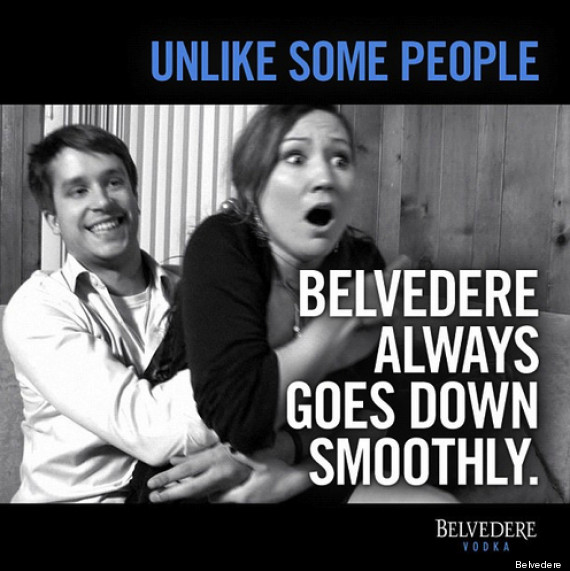
In today’s digital world, all eyes are on you, all the time. The critical eye of the consumer never closes, and the world of social media has created a place where even the smallest branding faux pas is a recipe for complete financial disaster. There are cases of poor taste, such as this May advertisement for Belvedere Vodka. Even worse, there are times when brands can be persecuted for things they have absolutely no control of, or involvement in.

What can you do when your brand is thrust into the spotlight of consumer criticism? Can either of those examples serve as a template for escaping a PR nightmare?

The Skittles Strategy

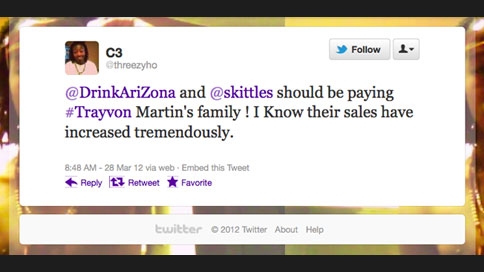
When details about the tragic Trayvon Martin shooting went public, Skittles and Arizona Iced Tea became unintentional icons of lost innocence. The brands were spoken of almost as often as the investigation itself. Consumers, invested in the horrific details of the killing, began to accuse both brands of profiting off of the tragedy and media exposure. Neither brand had anything to do with Martin’s death, but both were being ripped to shreds on social media for failing to respond.

What did they do?

Skittles and Arizona Iced Tea were forced to act, and responded with letters of condolence to Martin’s family. They said it would be the last word on the matter, and both brands stuck to their guns, refusing to give in to the public outcry.

What went wrong?

Consumers were convinced that both brands were pulling in record profits from the media hype, and demanded financial recompense. It was a bizarre and unfounded complaint, born from a collective desire for closure that court proceedings was not providing. Arizona and Skittles did their best to avoid further scrutiny by keeping silent, and they ended up being seen as uncaring and cold.

The Belvedere Vodka Strategy

In early March, Belvedere began a commendable social media effort, relying on a strategy of casual humor, and easily shared jokes, each one a clever ad for their product. Unfortunately, the casual attitude went too far, and an ad that never should have made it past editing wound up on their public-facing Facebook page.

What did they do?

The ad was a clear misstep, and the backlash was fast and fierce. Belvedere pulled the ad once the blogosphere had gotten wind of it, and issued a series of apologies. They attempted to save face with a donation to an anti-sexual violence non-profit, but the move was seen as a shady PR stunt, and the brand has still not fully recovered.

What went wrong?

By the time Belvedere had responded to the complaints, any response they made would have been too little, too late. Unfortunately, once that ad was made public, there was nothing they could really do to make up for the damage it caused. Even though Belvedere went one step further than Skittles and Arizona, they were still seen as a corporation saving face, instead of an apologetic brand. They owned their mistake, but it wasn’t enough.

So, what can you do differently?

Any brand of reasonable age and size is in danger of falling into an inescapable faux pas like those above. It’s an unfortunate – but unavoidable – aspect of business. The solution lies in relying on the expertise of a branding agency, and using all of the available tools you have to protect your investment. If the worst happens, you need to be able to rely on a team that is flexible enough, fast enough, and smart enough, to turn the situation around.


The Tray PML Way is the blog for Tray, experts in the printing, mailing, logistics and promotional products. You can learn more about our capabilities by visiting our website, as well as our Facebook and Twitter pages. For information about the company and its successes, visit www.traypml.com


Monday, August 20, 2012

The Tray Way: How Do You Trust Something You Don't Know?

What makes us trust a brand? Obviously, the top answer is when a brand does right by you or someone you know. But, that only accounts for a limited number of situations. What about when that first-hand information isn't available to a person. Unfortunately for brands, the criteria can be less concrete.

This is the thought we had after reading a fun study, conducted by beverage company Honest Tea. They researched and reported on honesty of an array of different topics. The results include:
  • 93% of participants were honest
  • Salt Lake City and Oakland were both 100% honest
  • Women are 95% honest while men are 91% honest
  • Boston baseball fans are more honest than New York baseball fans
  • Redheads are more honest than blondes and brunettes
  • Motorcyclists were 92% honest while Comic Book fans were 86% honest
  • Men with beards were 96% honest while bald men were 85% honest 
Our first response to this release was that this is was a very clever way to promote their brand (well done, Honest Tea). But, our second thought was that these are some random results and that it is hard to believe that all the people surveyed have decisive (and objective) opinions on all of these topics. What this means is that at least some were just making up the answers based on the mood they were in (perhaps) or some other reason that isn't first-hand knowledge.

This is not good news for brands, especially ones that do everything right but feel like they are getting nowhere. The truth is (no pun intended) that sometimes you can't gauge what customer response to your brand will be, especially if they have nothing to base their decision on. It isn't that you aren't an honest brand that can't be trusted, its that a person, for example, may happen to see a website or a billboard for your competitor at the moment they need to make a decision. The best you can do is treat all current and potential customers the way they deserve to be treated, and continue to convey a message, tone and philosophy that is based around honesty and integrity. From there, marketing yourself in the most positive and strategic way possible to better convey your honesty has been proven to be the most effective means of gaining more business. Is there a 100% success rate? Of course not, but a customer's decision to choose a competitor can be for any number of reasons, whether it be a substantial or flimsy one (and that's just us being honest).


The Tray PML Way is the blog for Tray, experts in the printing, mailing, logistics and promotional products. You can learn more about our capabilities by visiting our website, as well as our Facebook and Twitter pages. For information about the company and its successes, visit www.trayinc.com

Tuesday, July 31, 2012

The Tray Way: Does the Olympic "Brand" Mean Something New?

With the ringing of a 27-ton bell, a Chariots of Fire reenactment, an array of literacy characters and dancing teenagers (and lets not forget a parachuting queen), the 30th Summer Olympics kicked off in London this week.

When you think of the Olympics (or at least the Olympic athlete), you think of fulfilling a dream and believing in ones self. You think of a young boy or girl, watching past Olympians compete, and longing to achieve that same level of success. You think of hardwork, dedication, perseverance, all in the name of vying to be the best, representing your country, and having that medal put around your neck.

That is the Olympics that athletes and spectators alike have known for the past 29 summer games. But, like most other things in the athletic community, the Olympics is a business, and according to some, it is the second most valuable brand in the world, which has lead to unprecedented efforts to keep that value safe.

In one of the most aggressive brand monitoring campaigns ever seen, efforts have been taken to insure that no use of the Olympic name is being used for promotional purposes without consent (and sponsorship dollars). This is obviously being done to protect the major sponsors like Visa Europe, McDonalds, Dow Chemicals and others, all of whom invested around $100 million to be a major sponsor of the games, and in return, have been catered to and given sole rights to signage, advertising and even food.

We know as well as any that a brand must be protected, and perhaps in this age of communications and social media, this is the new best practice on how to do it. At an estimated $47.5 billion, there are certain efforts that have to be taken or the inherent value of a brand like the Olympics can be severely diminished (which will go on to hurt potential revenue streams at future events). However, is it a step too far in the case of the Olympics? The Olympics were meant to bring people together in one place in the spirit of competition. It was meant to be an open venue for people from different countries to meet in one of the only truly safe environments left in the world. While this feeling of welcome and positivity will continue to be viewed this way in London (and likely in Brazil four years from now), are we inching down a slippery slope of hurting the "openness" of the Olympic brand by creating an "us" and "them" attitude?


The Tray PML Way is the blog for Tray, experts in the printing, mailing, logistics and promotional products. You can learn more about our capabilities by visiting our website, as well as our Facebook and Twitter pages. For information about the company and its successes, visit www.traypml.com